A sudden acquisition of fine art often begins with a rush of aesthetic appreciation. A canvas catches the light, or a sculpture commands the room, and the immediate impulse is to claim the piece. However, when that acquisition arrives not through a curated shopping trip but as an inheritance, the decision-making process shifts from simple desire to a complex stewardship of someone else's unfinished intentions.
Beyond the First Glance
The initial attraction to a piece of art is frequently sensory. You might be drawn to a particular palette or the way a texture interacts with the sunlight in your living room. While these visceral reactions are the foundation of any collection, they are rarely sufficient for long-term placement. An object that looks striking in a brightly lit gallery may lose its character entirely when placed against the specific shadows or wall tones of a Dallas residence.
Consider the tradeoff between immediate visual gratification and the long-term harmony of your environment. A bold, oversized work might provide an instant focal point, but it also dictates the arrangement of every other piece of furniture in the vicinity. You are not just choosing an object; you are choosing how that object will reshape the energy of your physical space.
Uncovering the Object's Narrative
When you inherit a collection, you are often inheriting a series of questions. The history of a piece is as much a part of its identity as the medium used to create it. Rather than assuming the context, engage directly with the source of the work. Ask the seller or the estate representative about the stated history of the piece and what documentation accompanies it.
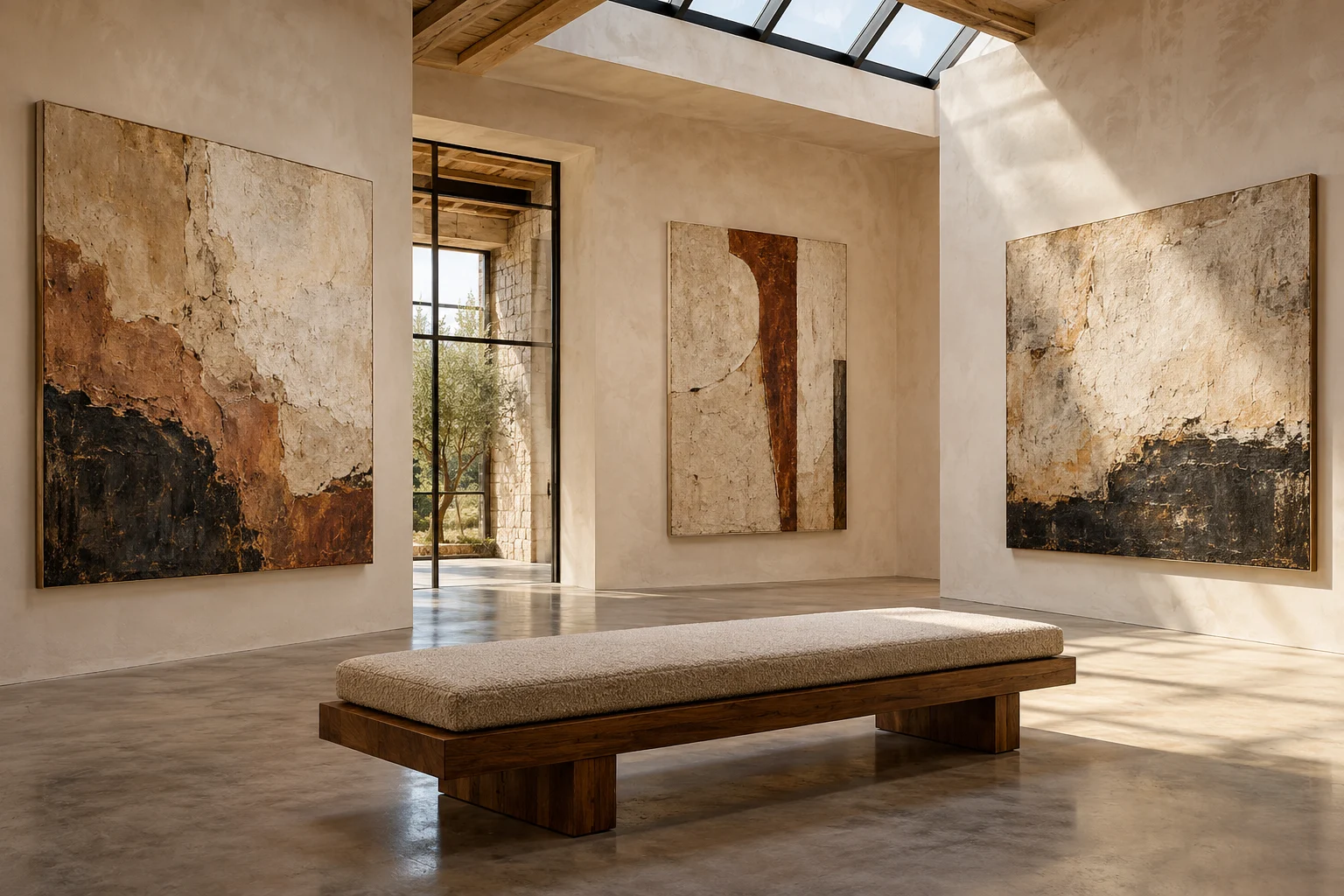
For example, if you find yourself holding a series of large-scale abstract paintings, you might wonder if they were intended to be viewed as a single, cohesive installation or as individual statements. Ask the provider how the works were originally grouped or if there is a specific sequence intended by the previous owner. Understanding the intended relationship between pieces can help you decide whether to maintain the original arrangement or to break the set apart to suit your own lifestyle.
Mapping the Intended Space
The final stage of the decision involves the intersection of the art and your architecture. An inherited collection often comes with a legacy of where these items *should* go, which may conflict with how you actually live. A heavy bronze sculpture might have been meant for a formal foyer, but your daily routine might require that space to remain open and unobstructed.
Before committing to a permanent installation, observe the work in your home through different times of day. Notice how the light moves across the surface and how the scale feels when you are walking through the room rather than standing before it. If you find yourself uncertain about the physical requirements of a large or delicate piece, ask a professional about the specific mounting or placement needs to ensure the work is accommodated safely within your specific environment.